Business owners are always looking for ways to be more environmentally friendly and save money. One way to do both of those things is by recycling pavement.
Asphalt can be recycled into new pavement, saving the resources needed to create new pavement and curtailing the number of pollutants released into the environment.
This blog post by Affordable Sealing & Striping, Inc. will discuss the ins and outs of recycling pavement, plus all the benefits you can expect from it.
What Is the Process of Asphalt Recycling?
Recycling asphalt is not as complicated as you might think. The process begins by removing the top layer of asphalt in the asphalt milling procedure. The top layer is removed from a street, parking lot, or driveway using asphalt milling without disturbing the underlying sub-base.
The milled-up asphalt is then taken to an asphalt plant for screening and re-sizing. The end product is recycled asphalt that you can use for new paving projects.
The "renewed" asphalt quality is much better than the original pavement in most cases. This is because asphalt recycling reclaims old aggregates and bitumen, which helps extend the life of new pavements.
What Is the Process of Concrete Recycling?
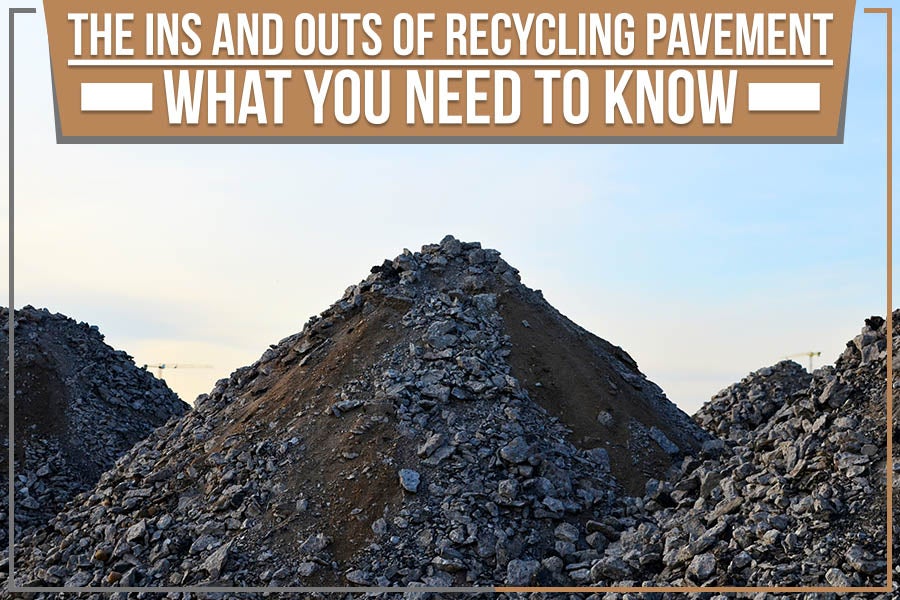
This is another relatively straightforward process. The concrete is first broken and removed, then crushed into a specific size and quality, similar to the asphalt.
Other materials like reinforcing steel and contaminants like asphalt are also removed. Once the material is clean, and of the right consistency, you can reuse it just like new concrete.
You also can use the crushed concrete as an aggregate while creating a new asphalt sub-base in paving projects.
What Are the Benefits of Pavement Recycling?
Where to start? There are many perks to using recycled asphalt and concrete, including:
- It's environmentally friendly: By recycling materials instead of extracting and processing new ones, you reduce the amount of waste going into landfills.
- It saves money: Recycled pavement is cheaper than new material, so it can help reduce the overall cost to the contractor and the taxpayer.
- It's durable: Recycled pavement has been shown to last just as long, if not longer, than new pavement.
- It helps conserve natural resources: Recycling the mineral particles produced by crushing asphalt and concrete reduces the need for new quarries and mines.
- It's versatile: In the case of recycled asphalt, you can use it as a base for new pavement or as an overlay. Recycled concrete can be used as a base or sub-base or crushed and used as aggregate in other construction projects.
- It's sustainable: When you recycle pavement, you're extending the life of the material and reducing the environmental impact of gleaning and processing new materials.
Conclusion
There's one more benefit to using recycled pavement: it's a reliable service offered by Affordable Sealing & Striping, Inc. We've been in the business of recycling pavement in Cheyenne, WY, for several years, so you can trust us to get the job done right.